
Article 4 Directions Explained
A direction bans nothing; it removes the automatic permission, so the only useful answer is which classes it takes and from what date.
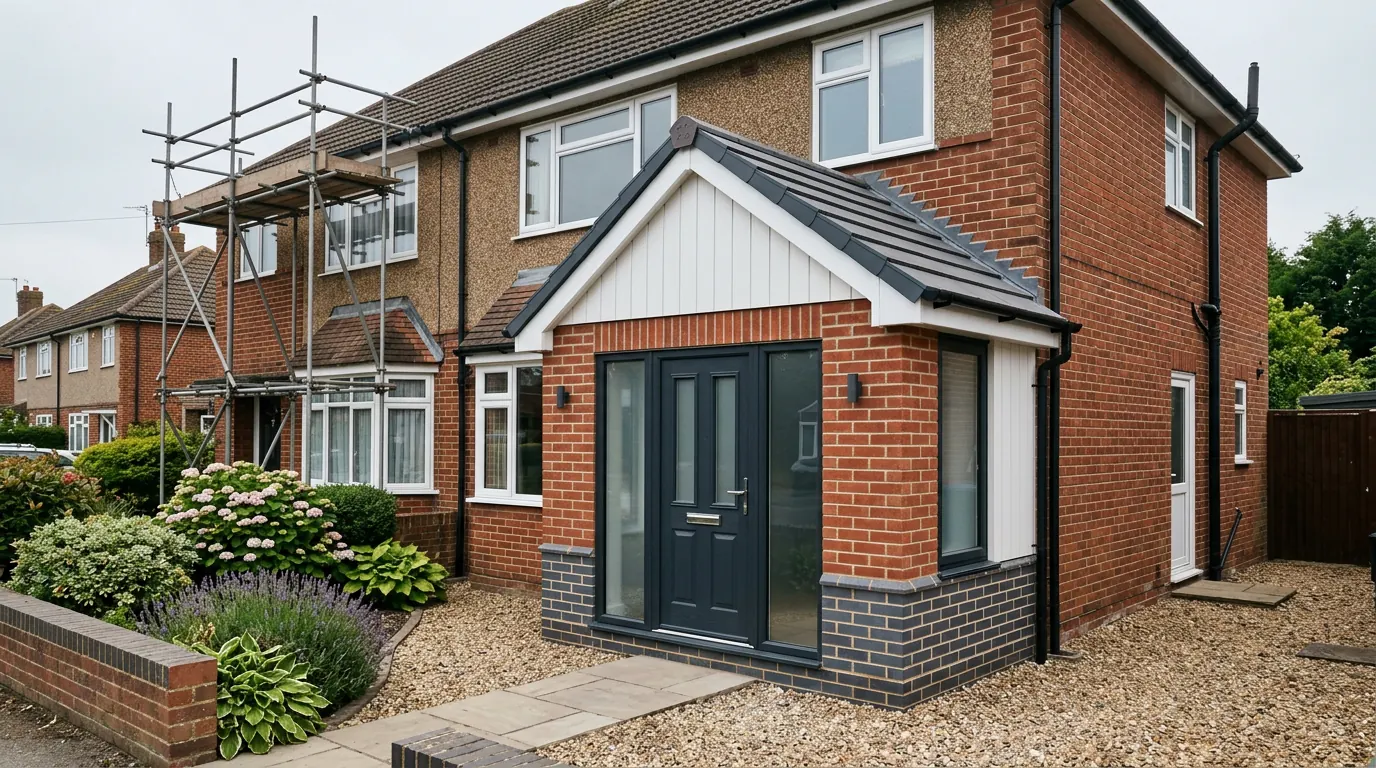
An Article 4 direction is the mechanism a council uses to switch off permitted development rights over a defined area, or over a single property. It does not ban anything. It removes the automatic permission, so work that would otherwise need no application now needs one. Most homeowners meet the term for the first time in a refusal letter or a solicitor’s search, which is late.
What a direction actually is
A local instrument that withdraws a national grant of planning permission over a specific patch of ground.
Permitted development rights are a national grant of planning permission, set out class by class in the General Permitted Development Order. Article 4 of that same Order lets a local planning authority disapply named classes within a boundary it draws. The rights disappear inside the line and continue as normal outside it.
Two consequences follow that people routinely get the wrong way round. The first is that a direction does not make the work unlawful or refuse it in advance. You are entitled to apply, the application is judged on its merits against policy, and directions of this kind are made precisely because the council wants to look at the work rather than to stop it. The second is that the direction is the whole of the change. Nothing else about your property alters: the Building Regulations position is untouched, the Party Wall Act position is untouched, and a designation such as a conservation area operates separately from it.
National policy keeps the tool on a short leash. Where a direction would remove permitted development rights from dwellinghouses, policy says it should be limited to situations where one is necessary to avoid wholly unacceptable adverse impacts, and that directions should generally cover the smallest geographical area that will do the job. Councils that overreach get told so, which is why most residential directions are narrow in both area and scope.
The question is which classes, not whether
“Is there an Article 4 direction here” is the wrong question to ask, and it produces a useless answer.
A direction is a document. It names the Parts and Classes of the Order it removes and it defines the land it applies to, and no two are the same. One street may lose only the right to replace windows and doors. The next may lose the whole of the extension and roof alteration regime. A single listed terrace may carry a direction of its own that stops at the property boundary.
So the answer you need is not yes or no. It is the wording: which classes, over which land, from which date. A council officer telling you on the phone that “there is an Article 4 in that area” has told you almost nothing, and the summary on a constraints map is not the instrument. Ask for the direction itself and read the schedule to it.
What a residential direction usually takes away
The list is short, and it is almost entirely made up of things visible from the street.
- Windows and doors. Replacement of original joinery, usually where timber sashes or casements are being lost to plastic. This is the commonest single target.
- Roof coverings and chimneys. Re-covering a slate roof in concrete tile, or taking a chimney stack down, changes a roofline permanently and visibly.
- Painting, render and cladding. Including the painting of previously unpainted brickwork, which is close to irreversible on a soft old brick.
- Front boundary walls, railings and gates, and their demolition. Loss of front garden walls to off street parking is the change that alters a Victorian street fastest.
- Hardstanding in front gardens, for the same reason, and with a drainage consequence as well as a visual one.
- Porches, outbuildings, flues, aerials and satellite dishes, individually or as a group.
Roof windows deserve their own note, because this is where a direction changes an answer that most sources get wrong. A conservation area designation on its own does not remove the right to put a rooflight in the plane of a roof slope. The Order splits roof work in two: enlargements such as dormers are excluded on designated land, while other alterations, which is where rooflights sit, are not. An Article 4 direction is the thing that can remove that remaining right, and where one does, a rooflight on any slope becomes an application. The detail of the rooflight rules themselves is in do I need planning permission for a rooflight, and what a conservation area does and does not remove is set out in extending a house in a conservation area.
The same mechanism is used for things that have nothing to do with extensions. Councils use directions to control conversions of family houses into houses in multiple occupation, and to manage the right to turn commercial premises into flats. If you find a direction covering your address, check what it is actually about before assuming it touches your extension at all.
How a direction is made, and why you usually get a year
The 12 months’ notice you sometimes see is not courtesy. It is the council avoiding a compensation bill.
Most directions are made in draft, advertised locally with site notices, opened to representations, and then confirmed by the council if it still wants to proceed. The Secretary of State is notified and retains a power to intervene. That process takes months.
There is a faster version for urgent cases, where a direction takes effect immediately on being served. Its life is short unless it is confirmed: an immediate direction lapses at the end of six months from coming into force if the council has not confirmed it within that period. These are used where something is being lost while the ordinary process runs.
Compensation is the reason for the timetable you will see. Under the 1990 Act, an owner can in principle claim for abortive expenditure or depreciation where permission is refused for work that would have been permitted development but for the direction. That liability falls away if the council published notice of the withdrawal far enough in advance, which is why a direction is commonly made a full year before it bites. If you are inside that window and were already committed to the work, the timing is worth taking advice on rather than assuming.
A direction bites from the date it takes effect and no earlier. Work lawfully completed before that date is not made unlawful by it. If you have started but not finished, get the position confirmed in writing rather than working it out yourself.
Directions are not the only way rights disappear
On modern housing the culprit is almost never an Article 4 direction.
Far more common, and far less known, is a condition on the original planning permission for the estate removing permitted development rights from every house on it. Developers accept these routinely to get an estate through committee, and the condition then sits on the file for decades. It is not a direction, it is not on any constraints map as one, and it is very common on housing from the 1980s onwards. Around Colchester that means checking the estate permission for anything modern before relying on permitted development at all.
There are others. Permitted development for extensions applies to houses, so a flat or maisonette never had the rights to begin with. A house created by a change of use under permitted development can have restricted rights. And where a previous owner has already used the allowance, what remains is a separate question again, covered in permitted development rights for extensions.
| How the right disappears | Where it bites |
|---|---|
| An Article 4 direction | Named classes, inside a drawn boundary |
| A condition on the estate’s original permission | Very common on housing from the 1980s onwards |
| The property is a flat or maisonette | Never had the rights to begin with |
| A house created by a change of use | Rights can be restricted |
| A previous owner used the allowance | Only what remains is available |
How to find out whether one applies to your address
Four checks, in ascending order of how much they cost and how much weight they carry.
- Your own conveyancing file. An Article 4 direction is registrable as a local land charge, so the local search carried out when you bought the house should disclose one. That paperwork is sitting in a folder or with your solicitor, and it is the cheapest place to start.
- The council’s own records. Authorities keep their directions available for inspection and most publish them alongside the policies map. Ask for the direction and its schedule by name, not for a yes or no.
- A written planning enquiry. Slower, chargeable in some authorities, and it produces something you can put in front of a builder or a lender.
- A Lawful Development Certificate. The only route that settles the question with legal force. The council formally determines whether your specific proposal needs permission, and if a direction removes the right it will say so.
There is a national dataset of Article 4 directions published online, and it is a useful first look. Treat it as incomplete. It is populated by each authority publishing its own records to it, so an empty result cannot tell you whether a direction exists and has not been uploaded. A blank screen is not a clearance, and it is not something to build on.
What changes if one does apply
You apply, you pay the ordinary fee, and the council looks hard at exactly the thing the direction was made to control.
The application is an ordinary householder planning application with the ordinary eight week determination period running from validation. Where permission is needed only because of the Article 4 direction, the normal householder fee is payable. Plenty of guidance still says otherwise, because there genuinely was an exemption for exactly this situation: regulation 5 of the 2012 fees regulations, headed “Exceptions”, covered an application needed only because the permitted development order had ceased to apply. It was omitted in England on 17 January 2018 and nothing replaced it, so a direction now costs you the fee as well as the time. Nothing else is free either: you still need proper drawings, and on a windows or joinery direction you need more detail than you would expect, because the officer is assessing a profile and a section rather than a footprint.
Two things improve the odds. Photograph and measure what is there now, before anything is removed, because a direction of this kind is usually about the loss of a specific detail and evidence of the original is the strongest material you have. And propose the like for like solution first: matching glazing bar widths, the same opening pattern, the same reveal depth. A direction is not usually an argument about whether you may replace a rotten window. It is an argument about what replaces it.
Where the work needs a full application anyway, the direction changes nothing about the process, and the route through it is the same one described on our design and planning application page.
What happens if you ignore it
The work becomes a breach of planning control, and the clock on it is longer than it used to be.
Work carried out in breach of a direction is unauthorised development. The council can serve an enforcement notice requiring it to be put back. For breaches occurring on or after 25 April 2024 the enforcement time limit for building work in England is ten years, where it was previously four, so the old assumption that a problem quietly ages out no longer holds for anything recent.
In practice the reckoning usually arrives at sale rather than through an enforcement officer. A buyer’s solicitor sees the direction on the search, sees new windows, and asks for the permission. Without one you are into indemnity insurance, a price reduction, or a retrospective application at the worst possible moment.
The whole thing in five steps
- Check the local search from your purchase, then the council’s records, for any direction covering the address.
- Get the wording of the direction itself and identify which classes it removes and from what date.
- Separately, check the planning history of the property for a condition removing permitted development rights, which is a different animal and far more common on modern housing.
- Establish which of those actually touch what you want to build. Many directions cover front elevations only and leave a rear extension entirely alone.
- If a right you need has gone, record the existing condition in photographs and measurements, then apply, and budget for the full fee even where the direction is the only reason you are applying.
We run the constraints check at the survey, before anybody draws anything, because the difference between a certificate and an application is the difference between a fortnight and three months on your programme. If you have found a direction on a search and cannot work out whether it reaches your project, the survey and the quotation cost nothing.
Directions are local instruments and they are made, varied and revoked over time, so nothing here can confirm what applies at your address. Treat this as an explanation of how the mechanism works, and check the current position with the council for your specific property.
Last reviewed August 2026. Planning and Building Regulations change, and your property may differ.
Thinking about the job itself?
Most people who call us already have drawings and permission and want a builder to price the work and build it. Either way the survey and the written quotation cost nothing.