
Planning Conditions, and Why They Matter Later
The conditions under a permission are the permission, and the one that quietly removes your permitted development rights is invisible until you look.
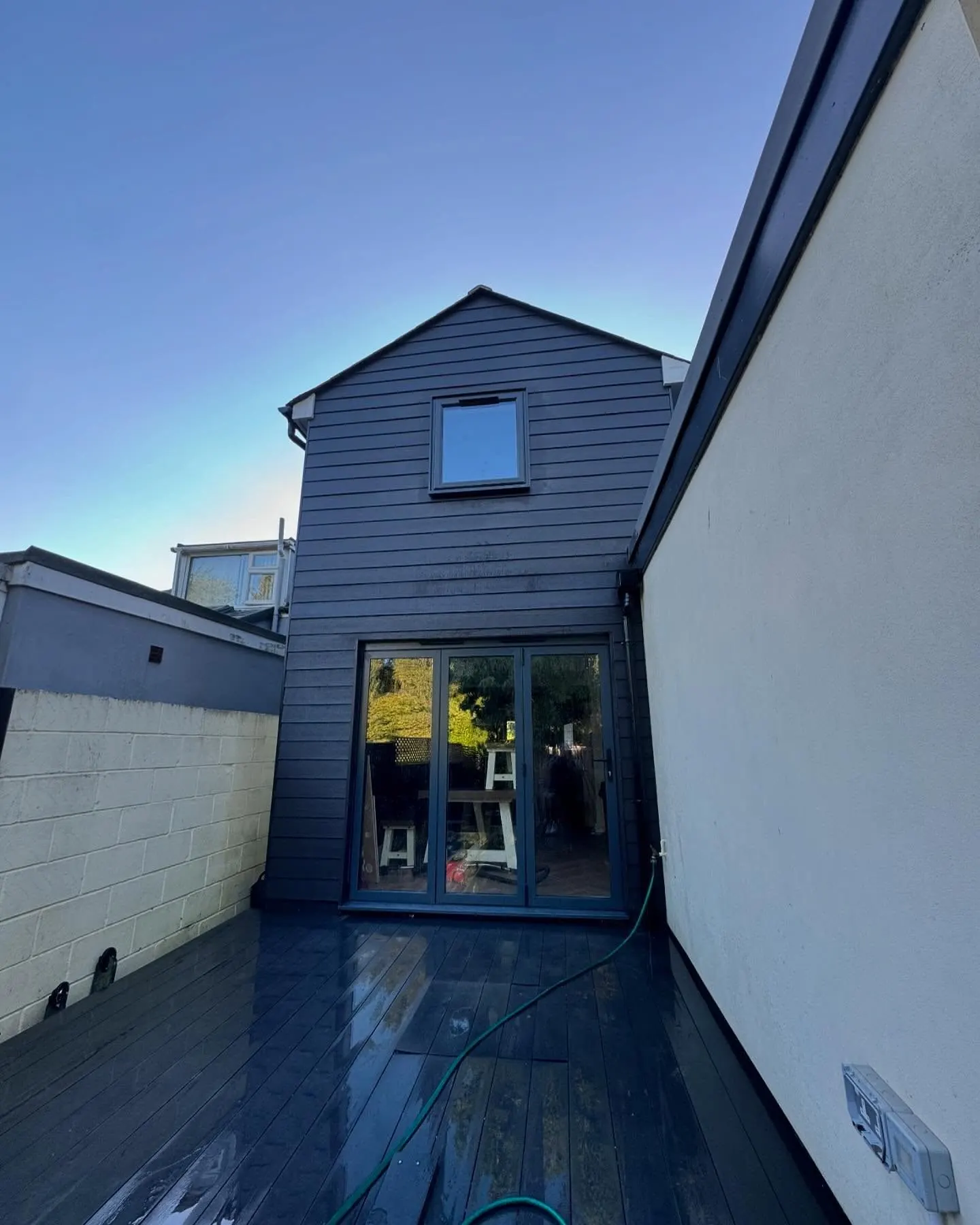
People treat a decision notice as a yes or a no. It is neither, quite. A householder permission almost always arrives with a list of conditions underneath it, and those conditions are the permission: they decide when you may start, what you may build, what has to be agreed first, and in some cases what you and every future owner may never do to the house again. This guide explains what a condition legally is, the different ways of getting one changed, and why the thing it gets confused with most often is not a condition at all.
Where the power to impose one comes from
A condition is public law, attached to the permission, and it has to pass a test to be valid.
The planning acts allow a council to grant permission subject to such conditions as it thinks fit. That sounds unbounded and it is not. National policy sets out six tests, and a condition should only be imposed where it is necessary, relevant to planning, relevant to the development being permitted, enforceable, precise, and reasonable in all other respects. Those tests have a long history in the courts behind them, and they are the reason a condition cannot be used to solve a problem that has nothing to do with your extension.
Precision matters more than the rest put together, because a condition nobody can interpret is a condition nobody can discharge. “Materials to match” is a phrase that has cost people months. Matching what, judged by whom, and approved when? If a condition on your notice is genuinely unclear, that is a reason to go back to the case officer early rather than to guess and find out at the wrong moment.
One thing worth naming and setting aside. A planning obligation, made under a separate section of the planning acts and usually called a section 106 agreement, is a deed rather than a condition. It binds the land, it is enforceable by the council as a contract, and on a householder extension you will almost never meet one. Everything below is about conditions.
The four kinds you will actually see
They behave differently, and the difference is in when each one bites.
The commencement condition comes on every full permission. Development has to begin within a set period, three years in the standard case, and if it does not the permission lapses. What counts as beginning is defined in statute rather than in ordinary English, and digging and pouring the foundation trenches is the usual way it is satisfied. There is more on that clock, and on what happens when it runs out, in how long planning permission lasts.
The approved plans condition ties the permission to a numbered list of drawings. What you have permission to build is the thing on those specific drawings, at those revisions. Build something meaningfully different and you have not breached a technicality, you have built something unauthorised, because the permission never covered it. Check that the numbers listed on the notice are the drawings you actually intend to work from, because a superseded revision on that list is a problem discovered on site.
Pre-commencement conditions require something to be submitted to and approved by the council before anything happens on site. Materials samples, tree protection, drainage details, a construction method statement. They are the ones that wreck programmes, and they get their own section below.
Compliance conditions run indefinitely. A flank window to be obscure glazed and non opening below a stated height and to be retained as such thereafter. A roof space not to be converted. A garage to remain available for parking a car, which is why so many garage conversions turn out to need an application. These bind whoever owns the house, not just the person who applied, and nobody ever reads them at the point of buying.
The condition that takes your permitted development rights away
It is the commonest reason an extension needs an application on a house where the rules say it should not.
A planning permission can carry a condition removing some or all of the permitted development rights that would otherwise apply to the property. On estate housing from the 1980s onwards this is routine. The condition was imposed on the original permission for the whole estate, decades before you bought, and it binds every plot within it.
Nothing about the house shows you it is there. It does not appear on the deeds, it is not a designation anybody has heard of, and a search will not necessarily flag it. It lives in the planning history of the site, on the register, and finding it means looking up the original permission rather than the recent ones. That check takes minutes and it changes the entire route a project takes, so it belongs at the start of a job rather than at the point somebody notices.
Where such a condition exists, the answer is not that you cannot extend. It is that you have to apply, and the application is judged on its merits like any other.
Pre-commencement conditions, and the word that decides your start date
Starting work with one outstanding can mean you never lawfully started at all.
Since 2018 a council has had to obtain the applicant’s written agreement before imposing a pre-commencement condition. That is a genuine right and it is quietly ignored, largely because applicants do not know they have it. If a proposed condition is unnecessary or could just as well be worded to bite before occupation instead of before commencement, say so at the time. Afterwards you are into a formal application to change it.
The reason it matters is a principle the courts have applied for decades. Where a condition is a true condition precedent, one that goes to the heart of the permission rather than merely regulating how the work is carried out, operations carried out in breach of it are not a lawful implementation of the permission. Not a minor irregularity: the development is unauthorised, and if the three year clock then expires the permission can lapse with a half built extension standing on the site. Whether a particular condition is a true condition precedent is a question of construction, and reasonable people argue about it, which is precisely why nobody should be relying on the argument.

There is a deemed discharge mechanism where a council fails to determine a discharge submission in time, and it is narrower than it sounds because several categories of condition are excluded from it. It is a backstop, not a plan.
Discharging, varying and amending are three different applications
People say “get the condition discharged” for all three, and the paperwork is not the same.
| What you want | The application | What you end up with |
|---|---|---|
| The council to approve the details a condition asks for | Approval of details reserved by condition, commonly called discharge of condition | A confirmation that the submitted details are approved. The permission itself is unchanged |
| A condition changed or removed altogether | An application to vary or remove a condition, under section 73 | A new planning permission, with the condition altered, sitting alongside the original one |
| A trivial correction to the approved scheme | A non material amendment | An amendment to the existing permission, for genuinely minor changes only |
The section 73 route is the one that surprises people, because it does not edit the decision notice you already hold. It creates a second permission. Both then exist, you choose which one to build, and any condition on the original that has not been carried across still applies to the original. It also cannot be used to change the description of the development, and it cannot be used to extend the time limit for beginning the work, which is a restriction written into the section itself.
Each of these carries its own fee and its own determination period, and a discharge submission covering four conditions is one request rather than four applications. Councils are slower on discharge submissions than on applications, partly because they are unglamorous and partly because nobody chases them. Building the time into the programme is more effective than complaining about it afterwards.
Breaching one, and what the council can actually do
There are two enforcement routes and only one of them gives you a right of appeal.
A breach of condition notice requires compliance within a stated period. There is no appeal to the Planning Inspectorate against one. The only defence runs in the magistrates’ court, on narrow grounds, and failing to comply is a criminal offence carrying a fine. It is a blunt and effective instrument, which is why councils reach for it.
An enforcement notice is the alternative, and it does carry a right of appeal, including on the ground that permission ought to be granted for what has been done. It takes longer for the council to use and it gives you far more room to argue.
Both are discretionary. A council is not obliged to enforce, and it is supposed to act proportionately. For building work in England the enforcement time limit is now ten years, following a change that took effect in April 2024, so the old assumption that a breach quietly ages out no longer applies to anything recent. In practice, though, the reckoning on a domestic extension usually arrives at sale rather than from an enforcement officer.
A condition is not a covenant
Two different bodies of law, constantly treated as one, and the confusion costs people money in both directions.
| Planning condition | Restrictive covenant | |
|---|---|---|
| What it is | Public law, forming part of a planning permission | Private law, an obligation over the land in favour of somebody else |
| Where you find it | On the decision notice, and on the council’s public planning register | On the title register and in the deeds, from the Land Registry |
| Who enforces it | The council, by notice | Whoever holds the benefit of it, through the civil courts |
| How it goes away | An application to the council to vary or remove it | A release agreed with the beneficiary, or an application to the Upper Tribunal to modify or discharge it |
| Does the other regime care | The council never looks at your covenants | The covenant holder is not bound by your permission |
Two consequences follow. A planning permission is not authority to breach a covenant, so a scheme with permission can still be stopped by an injunction obtained by a neighbour or a management company with the benefit of one. And a covenant is not a planning consideration, so a neighbour who raises one in an objection is raising something the officer is obliged to ignore, however real the restriction is.
Covenants are common on estate housing and on land sold off by a former estate, and some require the consent of a developer or a management company before any alteration. Check the deeds at the same time as the planning history, because the two answers together decide what is actually buildable.
Reading your decision notice properly
Split the conditions into two lists on the day it arrives: those that have to be satisfied before anything happens on site, and those that can wait. Check the drawing numbers on the approved plans condition against the drawings in front of you. Diarise the commencement date. Note anything worded to run in perpetuity, because that is the one a buyer’s solicitor will ask about in a decade.
We do that on the day the notice comes in and get the pre-commencement submissions away while the build is still being scheduled, which is the only point in the job where those weeks are free. The wider process, from validation through to a determined application, is set out on our planning application support page.
Statutory periods, fees and enforcement rules are revised from time to time, and how any condition applies depends on its exact wording and on the permission it sits under. Treat this as an explanation of how conditions work rather than as a reading of yours.
Last reviewed August 2026. Planning and Building Regulations change, and your property may differ.
Thinking about the job itself?
Most people who call us already have drawings and permission and want a builder to price the work and build it. Either way the survey and the written quotation cost nothing.