
Neighbour Consultation and Objections
An objection is not a veto, and knowing what the council may and may not take into account is worth more than knowing how many neighbours wrote in.
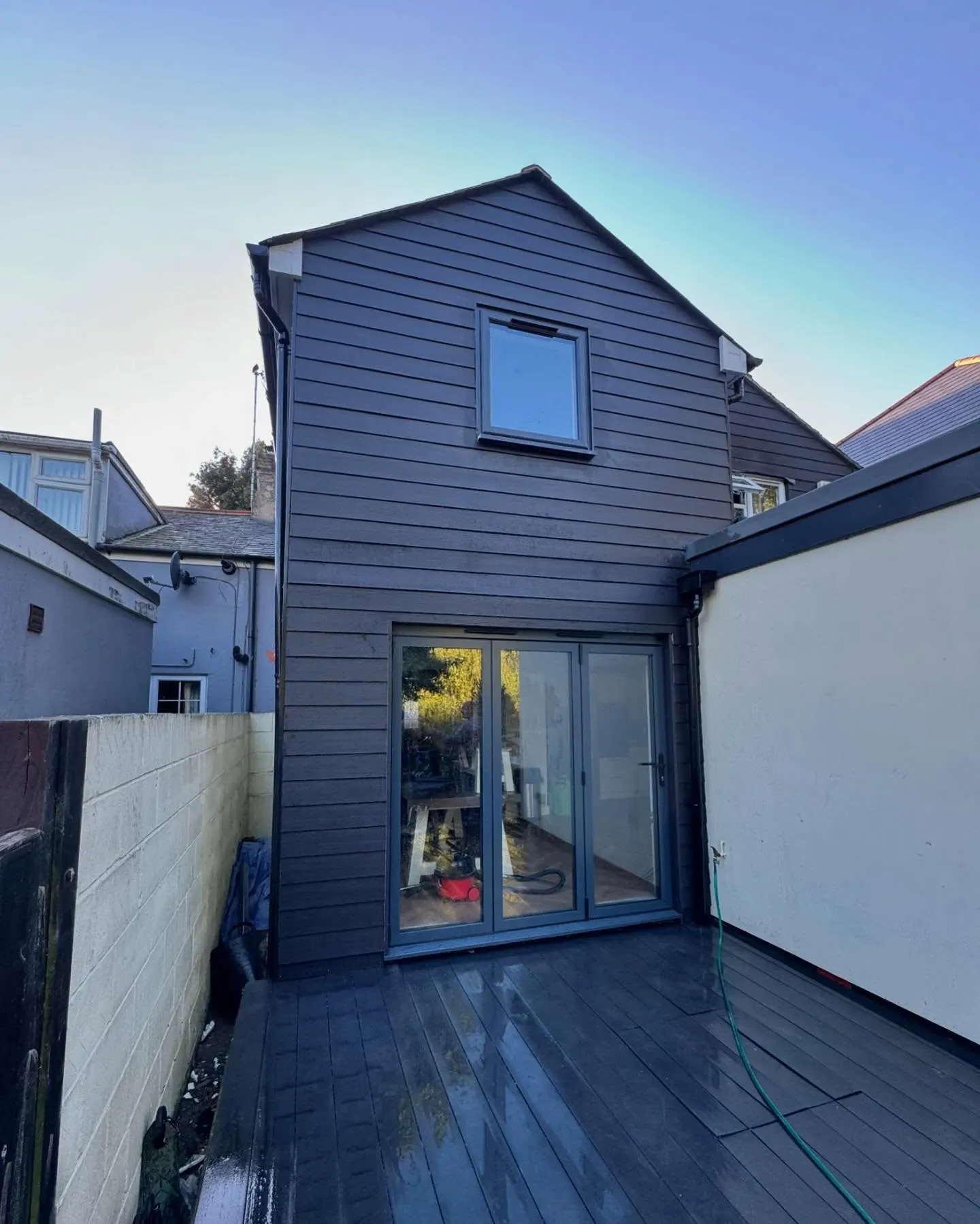
An objection is not a veto, and a consultation is not a negotiation. Both of those things are true, and neither is much comfort at the point a letter with the council’s crest on it lands on next door’s doormat. This guide covers what the consultation is legally for, what happens to a comment once somebody has written one, and what the person who wrote it can and cannot do afterwards.
Consultation is a duty on the council, not a courtesy from you
The publicity is a statutory requirement, and it belongs to the council rather than to the applicant.
Once a householder application has been validated, the council has to publicise it. The Town and Country Planning (Development Management Procedure) (England) Order 2015 sets out how, and for an extension the council chooses between displaying a site notice and writing to the owners and occupiers of adjoining properties. The two routes do not carry the same statutory minimum. A site notice has to stay up for not less than 21 days. A neighbour letter has no equivalent floor, and what the Order guarantees instead is that the date for representations cannot fall earlier than 14 days after the application is published on the council’s website. Whichever period the council sets, it cannot determine the application until that period has run.
Two details in that surprise people. The duty sits on the council, so nothing you do or fail to do with your neighbours changes whether it happens. And adjoining means what it says: the properties sharing a boundary with the application site, which on a mid terrace is two houses and on an awkward corner plot can be five or six. Everyone else is free to comment as well. There is no requirement to live next door, or nearby, or in the district at all.
Comments go onto the planning register, which is public and searchable. Councils normally redact signatures and contact details and publish the rest, including the name and the road. A neighbour who assumed they were writing privately to an officer has usually not realised that, and it is worth telling them before they write something they would rather not have standing on the internet in five years.
What the council is allowed to weigh, and what it has to ignore
The statutory test is narrow, and a great deal of what people want to say falls outside it.
An application is determined in accordance with the development plan unless material considerations indicate otherwise. That formula comes from the planning acts, and it is doing two jobs at once. It tells the officer to start from adopted policy rather than from instinct, and it restricts everything else that may be taken into account to matters that are material in planning terms.
Which considerations are material, and which are not, is set out in full on our design and planning application support page, because that list is what a scheme gets designed against. The useful thing to understand here is why the line falls where it does. Planning regulates the use of land in the public interest. It is not a mechanism for protecting one owner’s private interests against another’s, and that single principle explains why loss of a view, effect on property value and a boundary dispute all sit outside the system while loss of daylight to a habitable room sits inside it.
Weight attaches to the point being made rather than to the number of people making it. A petition is usually recorded as one representation with a count beside it. Anonymous comments are generally still read, though an officer cannot test something they cannot attribute, and a comment giving the writer’s own address is easier to take seriously because it tells the officer where the harm is said to be felt from.
Three consultations that are not the same consultation
The route your project takes decides who gets asked, and what they are allowed to be asked about.
| Route | Who is consulted | What their comment may be about |
|---|---|---|
| Householder planning application | Adjoining owners and occupiers by letter or a site notice, plus anybody else who chooses to write | Any material planning consideration |
| Larger Home Extension prior approval | Adjoining owners and occupiers, served by the council | The impact on the amenity of adjoining premises, and nothing else |
| Lawful Development Certificate | Nobody | There is no consultation stage |
On the prior approval route for a deeper rear extension the machinery differs in a way that changes the tactics completely. The council serves notice on the adjoining owners and occupiers. If none of them objects inside the period, the council has no power to refuse on amenity grounds. If one does object, the council decides the amenity question and only the amenity question, so an objection about materials, character or the look of the thing has nowhere to land.
A Lawful Development Certificate is different again, and the difference genuinely upsets people. It is a determination of fact and law about whether permission is needed at all. A neighbour’s opinion is not a fact about the planning rules, so there is no consultation, and a letter of objection would be legally irrelevant if somebody sent one.
What happens to the letter after it is sent
It ends up in a report, and the report is published.
Most householder applications are decided by an officer under delegated powers rather than by a committee. The officer produces a written report which summarises the representations received, sets out the relevant policies, applies them to the scheme and reaches a recommendation. That report goes onto the register alongside the decision notice, and it is the document to read if you want to know what an objection actually achieved. It will usually say in terms which points were material and which were not.
A ward councillor can ask for an application to be referred to the planning committee. Where that happens the decision moves from an officer to elected members, several weeks go on the programme, and the council’s constitution will normally allow a short slot for an objector and for the applicant to speak. That is the only stage at which anybody says anything out loud. It is strictly timed and it is not a debate.
Late comments are usually still taken into account if they arrive before the decision is issued, because the officer is entitled to consider anything material up to that moment. Nothing counts after it. Once the decision notice is signed, the application is determined and the file is closed.
What a neighbour cannot do once permission is granted
England has no third party right of appeal, and almost nobody knows it until they need it.

Only the applicant can appeal a planning decision. A neighbour who believes the council was wrong to grant permission cannot take that to the Planning Inspectorate, because the appeal system exists to review refusals and conditions rather than approvals. There is no equivalent of a right of appeal for the objector, and no amount of strength of feeling creates one.
What remains is judicial review, which is about legality rather than merits. A court asks whether the council followed a lawful process, took account of everything it was obliged to consider and left out everything it was obliged to ignore. It does not ask whether the extension is a good idea, and it cannot substitute its own view for the council’s. The time limit runs from the grant and is measured in weeks, the court’s permission is needed before a claim can proceed at all, and the losing side normally pays costs. As a response to a rear extension it is not a realistic option.
A complaint to the Local Government and Social Care Ombudsman is the other route, available where the council has maladministered the process, by failing to carry out a consultation it should have carried out for instance. The Ombudsman can criticise the council and recommend a remedy for the person affected. It cannot cancel a planning permission. Whether a neighbour can stop your extension has a short answer, and this is the long version of why.
The objections that are really about something else
Several of the things neighbours worry about are genuine legal rights, and none of them is a planning matter.
A shared wall engages the Party Wall etc. Act 1996 rather than the planning system. Notices under that Act are a separate legal requirement in their own right, triggered by cutting into a shared wall, building on the line of junction or excavating near a neighbour’s foundations, and they apply whether or not any planning permission was needed. A neighbour objecting to a planning application about a party wall is complaining in the wrong forum about a real problem.
Light can be a private property right as well as a planning consideration. A right to light is acquired over a long period through a defined window, and the test for infringing it is not the test a case officer applies, so a scheme can satisfy the council’s daylight guidance and still be actionable. The geometry of both sits in the guide to the 45 and 25 degree rules.
Access is the one that bites during the build rather than before it. You have no general right to put scaffolding over a neighbour’s land, to work from it, or to swing an arm across it, and doing any of that without agreement is trespass whether or not you hold permission. The Access to Neighbouring Land Act 1992 is often mentioned at this point and it is narrower than its name suggests: it provides a court route for works reasonably necessary to preserve an existing building, meaning repair and maintenance, rather than for putting something new up. Building an extension does not qualify. So if the scaffold has to stand on their side, agreement is the only route there is. Ask early, ask in writing, and have the scaffold designed to sit on your own ground if the answer might be no.
Restrictive covenants on the title are private law again. The council neither checks them nor enforces them, and it will grant permission for something your deeds forbid without ever knowing. They are not a planning objection and raising one carries no weight, but they can stop a project that has full permission, which makes them your conveyancer’s problem rather than the officer’s.
If you are the one objecting
The same rules read backwards, and they make a short letter far more effective than a long one.
Write about a specific window, a specific room and a specific effect. An officer can weigh the statement that a proposal will stand two metres from the kitchen window of a north facing room. They can do very little with the statement that it is out of keeping and will ruin the street. Say where you are writing from, get it in before the period closes, and use the vocabulary the system uses: daylight, overlooking, overbearing, character, highway safety.
Leave out the things the officer must ignore, because they cost you credibility on the points that count. If you have a private right at stake, a covenant or a party wall matter, deal with it in the right place rather than trying to convert it into a planning argument.
Before the letter goes out
Objections are far more often a reaction to being surprised than a considered planning argument, and once one is on the file it stays there whether or not the writer later softens. Showing your neighbours the drawings before the application goes in costs nothing, and the questions they ask are usually about the build rather than the design: how long the noisy part lasts, where the skip goes, whether the scaffold comes over the fence. Those are answerable, and they are not what an objection form asks about.
We go through the boundary relationships at the first survey, before anything is drawn, because an objection that can be designed out is cheaper to deal with at that stage than at any point afterwards. If a neighbour has already raised something with you, bring it to that visit and we will tell you honestly whether it has any weight.
Procedures and consultation periods are set in regulations that change from time to time, and how any of this applies depends on the property, the route the application takes and the council determining it. Treat this as an explanation of how the system works rather than as advice on a particular dispute.
Last reviewed August 2026. Planning and Building Regulations change, and your property may differ.
Thinking about the job itself?
Most people who call us already have drawings and permission and want a builder to price the work and build it. Either way the survey and the written quotation cost nothing.