
How Long Does Planning Permission Take?
Eight weeks that start later than most people expect, and a timetable mostly built from the parts either side of them.
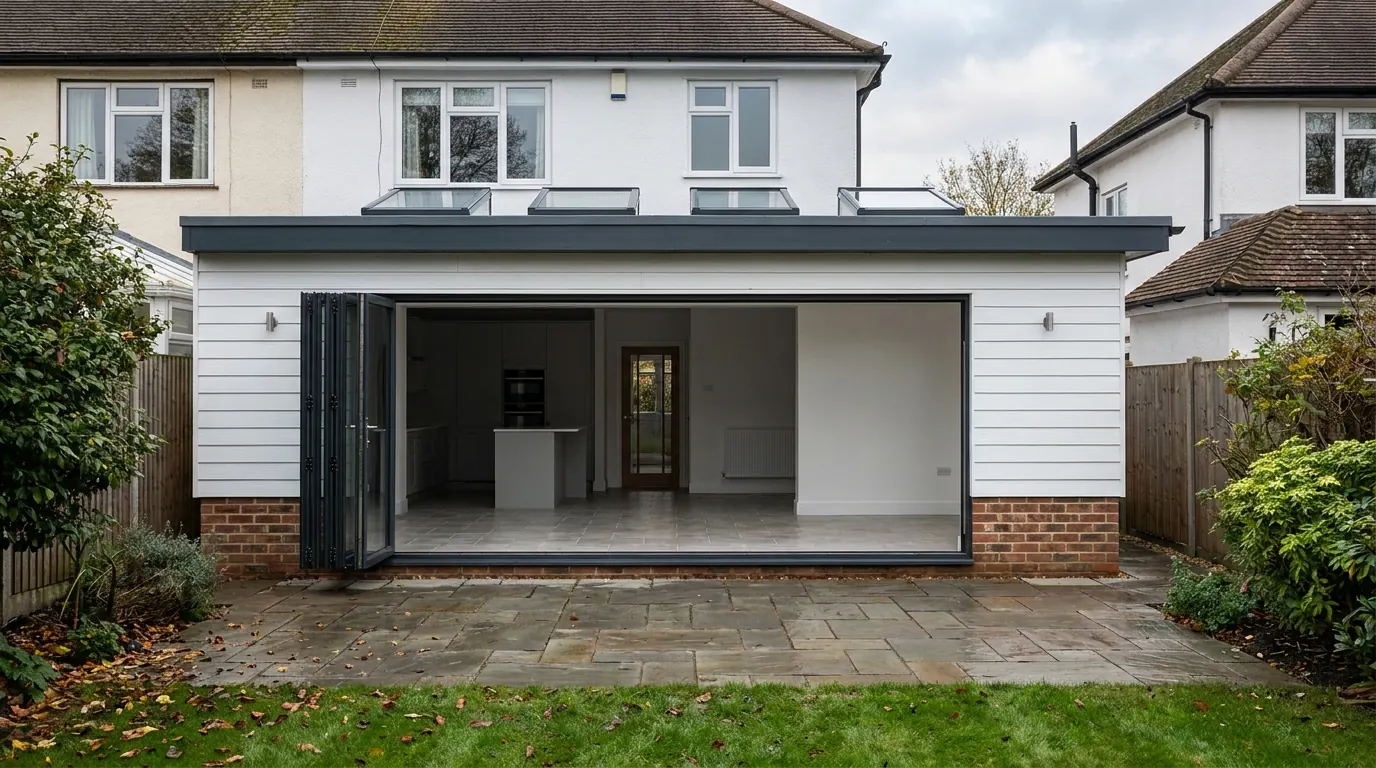
A householder planning application has a statutory determination period of eight weeks, and it runs from the date the council validates the application rather than the date it is submitted. Validation takes a few days on a clean submission and much longer on one missing an item from the council local list. Allow around three months from the first survey to a decision notice, because the drawings, the validation check and any agreed extension of time all sit outside the eight weeks. Prior approval under the larger home extension route runs to 42 days instead.
A householder planning application has a statutory determination period of eight weeks, and that period runs from the date the council validates it, not from the date you press submit. Allow around three months from the first survey to a decision notice, because the drawings, the validation check and any agreed extension of time all sit outside the eight weeks.
Those eight weeks are the only part of the timetable fixed in law. Everything either side of them is a queue, and most of the queue is yours to manage.
Where the clock actually starts
Validation, not submission, and the gap between the two is the part you control.
An application arrives, and a validation officer checks it against the national requirements and against the council’s own published local list. Only when it passes that check is it valid, and only then does the eight weeks begin. On a clean submission that takes a few days. On one missing a scale bar, a north point, a signed ownership certificate or an item from the local list, it takes however long you take to send the missing thing.
An invalid application is not refused. It sits, generating an email, with no clock running at all. A fortnight can go before a case officer has opened the file, and almost none of it is avoidable once the submission has gone in wrong. That is why the drawing package is worth more attention than it usually gets.
What is happening inside the eight weeks
Most of the period is consultation, and consultation has a fixed minimum of its own.
The council publicises the application, normally by writing to the adjoining properties and sometimes with a site notice, and allows at least 21 days for comments. An officer cannot sensibly write a report before that period closes, so the first three weeks are largely publicity whatever else is going on.
Alongside it the officer visits the site and consults whoever needs consulting: the tree officer where a tree is protected, highways on anything affecting an access or visibility, drainage, the conservation officer in a designated area. Then the report is written and the decision issued. Most householder applications are decided by an officer under delegated powers, and that is the quick version of the process rather than the slow one.
What extends it, in rough order of how often
- Amended drawings. A material change to a scheme usually means re-consulting everyone already written to, which puts another publicity period into the middle of your eight weeks.
- A consultee who has not replied. The officer will not issue a decision without the response, and chasing it is not your job but it is your delay.
- An extension of time, agreed in writing between you and the council. Very common, and usually the right answer.
- Committee referral. A ward councillor can ask for an application to be decided by elected members rather than by an officer. That ties the decision to a committee cycle instead of to your eight weeks.
- The calendar. August and the fortnight around Christmas are slower everywhere, and a determination period that spans either one rarely comes in early.
What does not extend it, despite what people expect, is the number of objections. Twenty letters take an officer an afternoon. One objection that raises a genuine daylight problem takes an amendment, and that is what costs the weeks.
The extension of time, and why agreeing is usually right
An officer asking for more time is normally trying to avoid refusing you.
Where a scheme needs amending, the officer has two options: refuse it on the drawings as submitted, or ask you to agree a longer period and work the amendment through. Agreeing costs a few weeks. Declining buys a decision on the original scheme, and if that decision goes against you the cost is not weeks but a redesign, a second determination period and a second fee, since the concession that once made a resubmission free no longer exists.

There is one thing you give up. Once the statutory period expires with no decision and no agreed extension, you have a right of appeal against non-determination. On a householder extension that right is almost never worth using. An appeal is measured in months, and it hands the decision to an inspector who has never spoken to you, instead of to the officer who has been discussing an amendment.
The other routes run to different clocks
| Route | Period | Running from |
|---|---|---|
| Householder planning application | Eight weeks | Validation |
| Lawful Development Certificate for proposed work | Eight weeks | Validation |
| Larger home extension prior approval | 42 days | A valid notification |
| Discharge of a condition | Its own period, on its own application | Validation of that application |
The 42 days on the prior approval route behave differently from the eight weeks, and this is the part worth knowing. If the council has not notified you of its determination within the 42 days, you may proceed. The eight weeks carry no equivalent: an undetermined application simply remains undetermined, and silence gives you an appeal right rather than a permission.
The part before you apply, and the part after
The eight weeks are rarely the longest item on the list.
Survey and drawings take a fortnight to a month, depending on the technician’s workload and how quickly the design settles. Pre-application advice, where a marginal scheme justifies it, adds several weeks before you even submit and can save a great deal more than that. Neither is dead time if the design is still moving.
At the other end, a permission with a condition requiring something to be approved before development commences is not a permission to start. That discharge is a separate application with its own fee and its own determination period, and forgetting it is the classic way to lose a month at exactly the point you expected to break ground. Reading the conditions properly the day the notice arrives is a ten minute job that protects the programme.
The honest total
Run in parallel and submitted clean: two to three months from the first survey to a lawful start on site. Run sequentially, with an invalid submission and a forgotten pre-commencement condition in the middle, comfortably double that. The difference is almost entirely administrative rather than architectural, which is the frustrating part and also the encouraging one.
This page is about how long a decision takes. How long the permission then lasts once you have it is a separate question with a different answer, and the two get mixed up constantly. How we run an application sets out who does what inside these periods.
Statutory periods and validation requirements are revised from time to time. Treat this as an explanation of how the timetable is built, and confirm the current position for your own application against the review date at the foot of this page.
Last reviewed August 2026.
Thinking about the job itself?
Most people who call us already have drawings and permission and want a builder to price the work and build it. Either way the survey and the written quotation cost nothing.