
Living in Your House During the Build
Most households stay put, and nearly all the difference between a hard build and a miserable one is settled in the fortnight before anybody arrives.
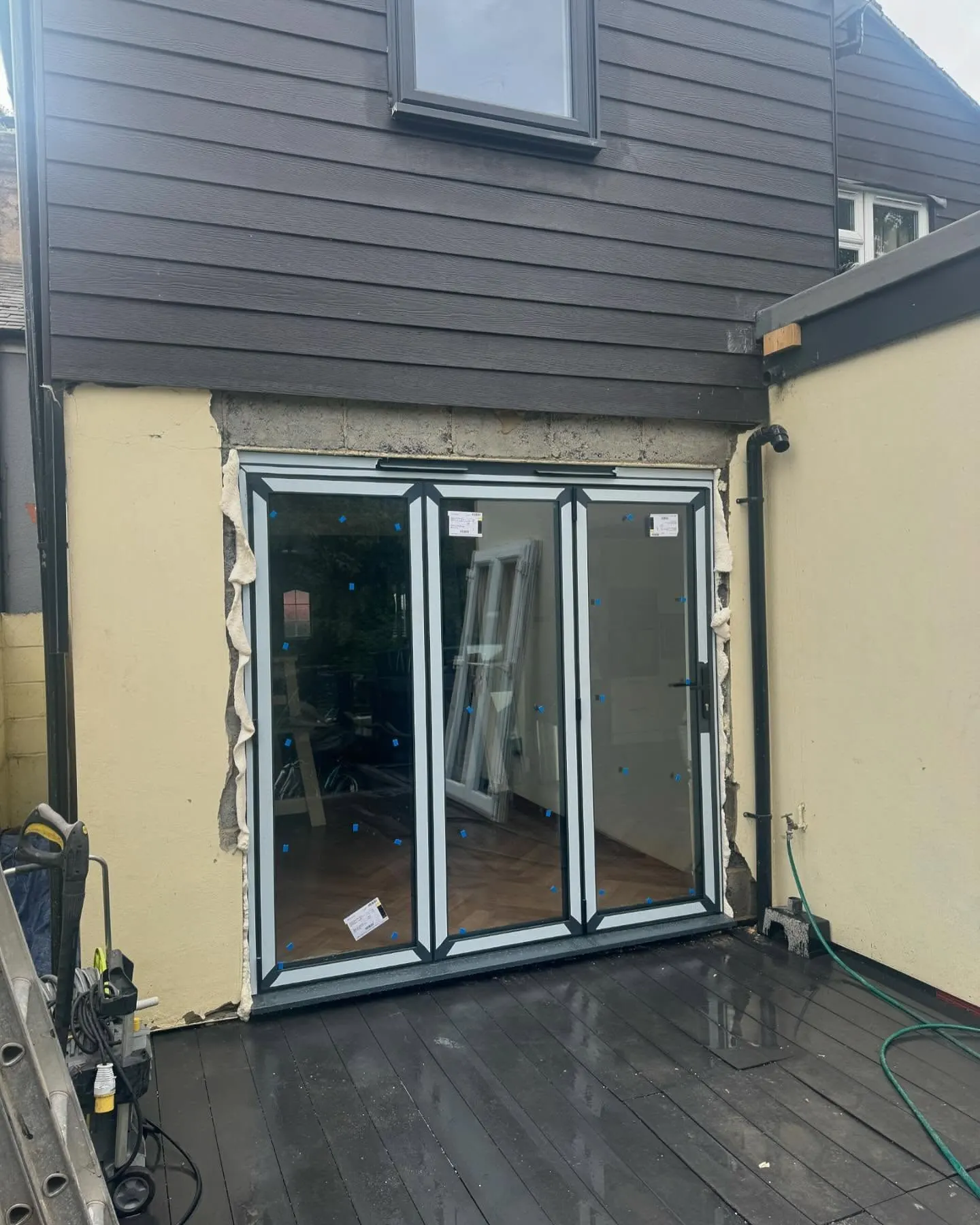
This question arrives late. Households spend months on drawings, quotes and permissions, and about ten minutes on where they are going to make a cup of tea in February. Most people stay in the house and most of them manage it. It is also worse than they expected, and nearly all the difference between a hard build and a miserable one is preparation done in the fortnight before anybody arrives.
Stay or move out
Do the sum, then check it against the things the sum leaves out.
Moving out is the obvious answer if you can afford it. No dust, no noise, no cold weeks, and the trades work faster with an empty house because they are not organising themselves around a family. On a two storey build or a whole-house reconfiguration it is worth taking seriously.
Staying has two operational advantages that get overlooked in the cost comparison. Decisions get made on the day they arise, and a decision that waits three days for someone to drive over can stall a trade and cost a week. You also see what gets covered up, which is the part of a building job you can never inspect afterwards.
| Staying | Moving out |
|---|---|
| Dust, noise and cold weeks | None of those |
| Decisions made on the day they arise | A decision that waits can stall a trade for a week |
| You see what gets covered up | You do not |
| Trades work around a family | Trades work faster in an empty house |
| Eating out is the extra cost | Council tax, storage and a short let all run on |
Three costs of leaving are routinely missed:
- The house still bills you. Council tax remains payable. Any discount for a property undergoing major structural repair or alteration has been at each billing authority’s discretion since April 2013, so it might be half for six months, it might be nothing at all, and the only way to find out is to ask the authority for that address. Several councils have withdrawn it entirely. Do not budget for it before you have been told.
- Buildings insurance narrows. Most household policies restrict cover once a property is unoccupied beyond a stated number of consecutive days, commonly somewhere between thirty and sixty. Cover often drops back to a short list of perils, and the exclusions typically include escape of water and theft, which are exactly the risks on a house that is open at the back. The number is in your policy wording, and the insurer needs telling either way.
- Two of everything. Standing charges on an empty house, furniture storage, a deposit on a short let, and the fact that short lets around Colchester are priced for relocations and contractors rather than for building projects.
The middle option is the one most people end up wishing they had planned. Stay for the shell and the roof, and go somewhere else for the fortnight when the kitchen is out and the heating is off. It costs a fraction of a full let and it removes the two or three genuinely bad weeks.
What stops working, and for how long
Disruption is not continuous. It is a run of short outages, and every one of them can be planned around.
Thinking about it week by week is not much use, because programmes move. Thinking about it service by service is, because the outages are the same whatever order they come in.
- Water goes off for a few hours at a time while new runs are connected. Fill a couple of containers the night before. An outside tap often survives longer than the kitchen one.
- Electricity goes off properly at least once while the consumer unit is worked on and circuits are re-routed, plus short outages either side. Freezers are the thing people forget, and the router is the thing they notice.
- Heating disappears if the boiler moves or a radiator sits on the wall coming down. Two electric heaters cost less than one night in a hotel and are worth buying before you need them.
- The kitchen is the longest outage by a wide margin, and it decides how the whole build feels. It has its own section below.
- Broadband often enters the house exactly where the extension is going. Find the master socket before anybody swings anything, and tell the builder where it is.
- The garden and the rear access are gone for the duration, and so are the washing line, the shed and usually the patio furniture.
The one date worth having in advance is the day the back wall comes out. The house is open to the weather at the end of it, the noise is at its worst, and it is entirely predictable, so it should be a planned day rather than an announced one. What happens structurally on that day is covered on our page about forming structural openings.
The temporary kitchen
Set it up properly before day one and it stops being the thing that ruins the build.
Choose a room with a door on it, ideally a hard floor, and ideally not far from a sink you can tolerate. A utility, a dining room or an attached garage all work. The point of the door is that it keeps the dust out and keeps the room feeling like a room.
What you actually need is short: a kettle, a microwave, one or two induction rings, a toaster, a fridge, a table and a single cupboard so that food is not living in cardboard boxes on the floor. A slow cooker earns its place, because it produces a proper meal without a hob, an oven or supervision.
Washing up is the awkward part. A bathroom basin works and a bath works better, with a bowl and a drying rack. The washing machine is harder still, because it needs a supply, a waste and somewhere that will tolerate a spin cycle, so decide early between a temporary plumbing arrangement and a run of launderette weeks. Agree with the builder where household rubbish goes, separately from the skip, because more of it accumulates than usual and the route to the bins is longer than it was.
Then put a figure on eating out. It is not an indulgence, it is a line in the cost of the project, and a household with no kitchen for eight weeks spends real money on food it did not cook. Budgeting for it at the start stops it feeling like failure in week five.
Dust
Screens and boarded routes handle half of it. What you move out handles the other half.
Dust from cutting brick, block and plaster is fine, gritty and unusually good at travelling. A properly sealed screen at the opening rather than a sheet taped to a door frame, plus boarded routes through the house, deals with most of the airborne part. The rest is a household job, and it is worth doing thoroughly once rather than repeatedly.
- Empty the two rooms adjoining the work of pictures, books and anything textured.
- Bag hanging clothes. A wardrobe with the doors shut is not a sealed box, it is a dust trap with a lid.
- Curtains, rugs and upholstery come out or get wrapped.
- Cover televisions and desktop machines, and keep a laptop off the floor.
- Buy a spare vacuum filter now, because you will want one.
- Keep one room genuinely clean and be unreasonable about it. That one is for morale rather than for hygiene, and it works.
Nobody eliminates dust on a building job. Anyone who promises the house will stay clean has either not done this or is not going to be the one doing it.
Hours, noise, and the people who cannot leave
Working from home is the modern version of this problem, and it needs planning rather than endurance.

Colchester City Council’s advisory note on the control of demolition and construction sets working hours between 08:00 and 18:00 Monday to Saturday, finishing at 13:00 on Saturday, with nothing on Sundays or public and bank holidays, and vehicles connected with the works neither arriving before 07:30 nor leaving after 19:00. Anything outside that needs to be requested in writing and agreed in advance. Behind the advisory note sit real powers: section 60 of the Control of Pollution Act 1974 lets a local authority serve a notice specifying how construction works are carried out, including the hours, the plant used and permitted noise levels, and separately it can act on statutory nuisance under the Environmental Protection Act 1990.
What makes the difference day to day is simpler than the legislation. Ask on Friday which days next week are loud, and arrange your life around those rather than around the whole build. Breaking out, chasing walls, cutting the opening and the first morning of scaffolding are the ones to be somewhere else for. Calls can be taken from a car and taken better from a library.
Say at the start if somebody in the house is unwell, working nights, sitting exams, or small enough to need an afternoon sleep. Sequence can be adjusted for that far more easily than people assume, and it cannot be adjusted retrospectively. Pets need the same forethought: cats go out through open doors and stay out for two days, dogs bark at deliveries and end up where a nail gun is, and a written note on the door about either is worth more than an instruction given verbally on a Monday.
An open house
For part of the job your home has a hole in the back of it and a ladder up the side.
Scaffolding is a staircase to your first floor. Lock upstairs windows at night, move anything obviously valuable out of the rear rooms, and have a look at what is visible from the garden through the new opening. This is not an argument for anxiety, it is ten minutes of tidying up that removes an opportunity.
Ring your insurer and tell them the shape of it: what the work is, roughly how long, roughly what it is worth, and that the building will be open. Some insurers simply note it, some attach conditions, and a few adjust the premium. Every version of that is manageable beforehand and none of it is manageable after a claim. Agree as well who holds a key, how many exist, and what happens to them at the end.
Neighbours
They get the noise, the dust and the vans, and they get no extension.
Tell them yourself, before the scaffold arrives and before anything comes through the post. The things that actually annoy people next door are mundane and predictable: parking, deliveries at half past seven, dust on a car, a skip outside their house, and their own access being blocked by a van whose driver is somewhere in your garden.
Give them a number and mean it. A neighbour who can ring you at eight in the morning does not ring the council at nine. Keep materials, spoil and scaffold off their land unless you have asked, and remember that work touching a shared wall or excavating near their foundations is a legal process under the Party Wall etc. Act 1996 rather than a matter of courtesy. Someone who is annoyed in week two stays annoyed for six months, and you will still be living next to them long after the skip has gone.
The middle
Weeks four to eight are the ones nobody warns you about.
The start is exciting because things change hourly. The end is exciting because it starts to look like the thing you paid for. Between them is a stretch where the house is plainly worse than it was, nothing visible changes for days, first fix looks the same on Friday as it did on Monday, and you are being asked to choose sockets and tile layouts while eating a microwave meal in the dining room.
Two things help. Make the finish decisions early, while you still have the patience for them, because they arrive in a cluster and decision fatigue is a real cost. And put something in the diary: a weekend away in the middle of a build is maintenance rather than luxury.
Money conversations tend to land in the same window, because the ground has been opened by then and anything unexpected is now known. That is not a sign of a job going badly, it is the point at which unknowns stop being unknown. How those get priced and approved should already be settled in your contract and payment schedule, which is why it is worth reading that document before it matters.
What makes it easier, in order
- Set up the temporary kitchen before the first day, not on it.
- Ask every Friday which days next week are loud, and plan around those.
- Clear the two rooms next to the work completely rather than partially.
- Ring the insurer, and ring the council if you are going to be out of the house.
- Talk to the neighbours before anything arrives on a lorry.
- Keep one clean room and defend it.
- Choose the finishes early.
- Budget for takeaways as a line rather than a lapse.
How much of this you have to manage yourself depends on how the job is set up, and it is one of the practical differences between appointing trades separately and appointing one contractor. That is covered on our page on running the job as main contractor, and the disruption on a kitchen extension in particular is worth understanding before you commit to a start date.
Council working-hour notices, council tax discounts and insurance conditions all vary and all change. Check the current position with Colchester City Council and with your own insurer rather than relying on this page.
Last reviewed August 2026. Planning and Building Regulations change, and your property may differ.
Thinking about the job itself?
Most people who call us already have drawings and permission and want a builder to price the work and build it. Either way the survey and the written quotation cost nothing.