
What Happens If Planning Permission Is Refused?
A decision on one drawing rather than on the idea, and four routes forward of which appealing is rarely the first.
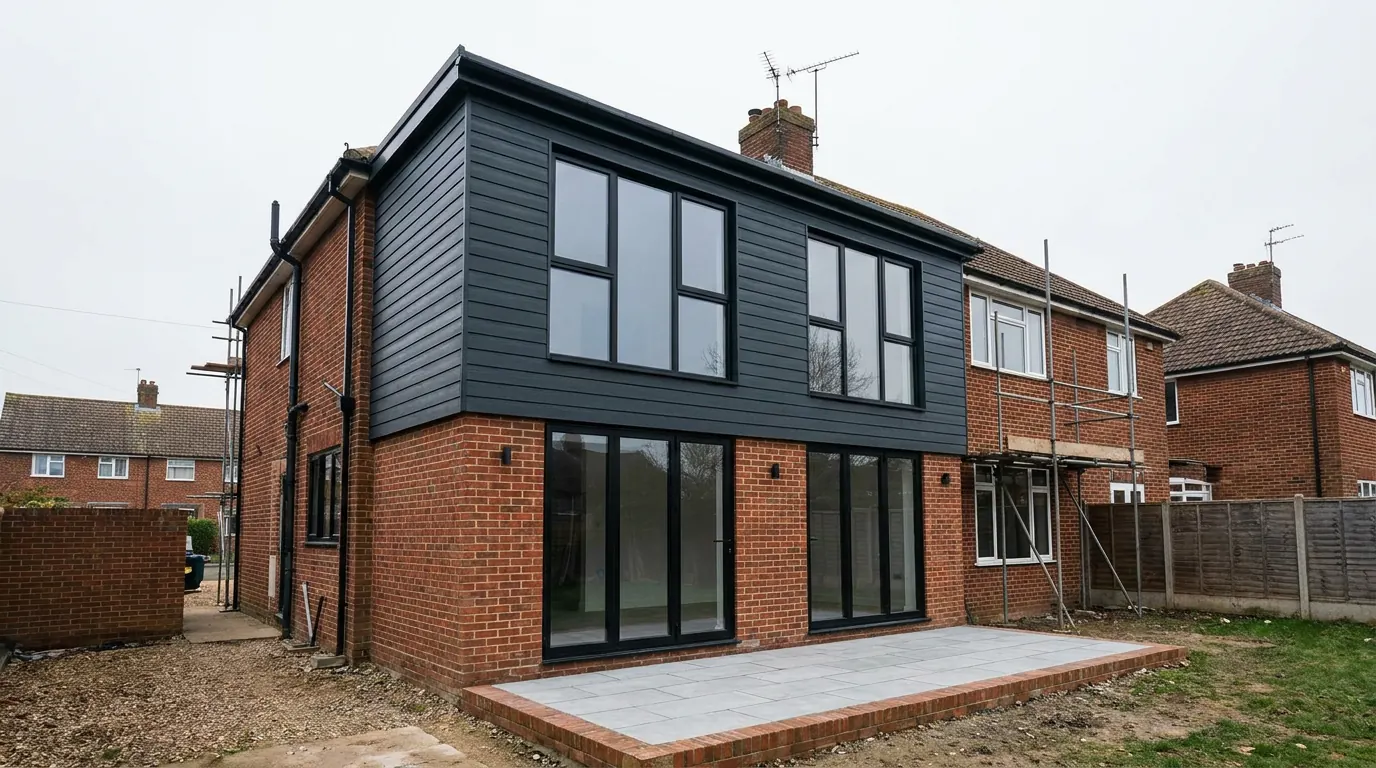
A refusal notice must state the council reasons in writing, and on a householder extension those reasons usually concern one feature of one drawing rather than the principle of extending. Four routes are open: amend and resubmit for a fresh eight week determination period, pull the scheme back inside permitted development where the rights survive, appeal to the Planning Inspectorate within twelve weeks of the notice, or build something else. The fee exemption that once allowed a free second application was revoked in December 2023, so a resubmission now carries a full fee. An appeal is decided on the scheme as submitted and cannot be amended part way through.
Nothing happens automatically, and a refusal is not a ruling on the idea of extending your house. The council must state its reasons in writing, those reasons are almost always about a specific feature of a specific drawing, and on a householder extension the usual answer is to fix the thing named and apply again.
You can apply as many times as you like. What has changed is that it is no longer free to do so.
Read the notice, then read the report behind it
Two documents, and the second one is the useful half.
The decision notice carries numbered reasons for refusal, each tied to a policy. That tells you what was wrong. The officer’s report, published on the council’s planning register alongside it, sets out the reasoning: what was weighed, what the objections said, what was considered acceptable and what was not.
It is common for a report to describe the amendment that would have satisfied the officer. A metre off the depth, a first floor window moved or obscure glazed, a ridge dropped, a flank wall set in from the boundary. That paragraph is worth more than any advice anyone can give you about your scheme, because it comes from the person who assessed it.
Four ways forward, and appealing is rarely the first
- Amend and resubmit. A new application answering the stated reasons, with a fresh eight week determination period. Normally the fastest route back.
- Pull the scheme back inside permitted development. If the rights are still there, no application is needed and no council can refuse it.
- Appeal to the Planning Inspectorate, on the scheme as it was submitted.
- Build something else, or stop. A legitimate answer when the reasons go to the principle rather than the detail, and an honest one when the numbers no longer work.
The second of those is the underrated one, and it gets missed because a refusal feels like a door closing on the whole project. It is not. A refusal decides one application; it does not touch the rights the house already has. If the refused scheme was a four and a half metre rear extension on a semi and the house still has its allowance, the three metre version needs no permission from anybody. It is a smaller room, and it is available immediately.
That only works where the rights genuinely survive. A conservation area, an Article 4 direction, a condition on the original estate permission or a previous extension already spent against the allowance all change the answer, which is why the original house measurement gets checked before anyone redesigns to it.
Resubmitting, and what it now costs
The free second go was removed in December 2023.
There used to be an exemption allowing one further application of the same character on the same site, within a set period, without a fee. Both of the fee exemptions that provided it were revoked with effect from 6 December 2023. A resubmission is now a full application at the full fee, and what that fee is changes each April.
That is a real change in how a refusal should be handled. When the second go was free, submitting a modest tweak and seeing what happened was a rational move. Now it is not. The version that goes back in is worth designing properly against the stated reasons, and the questions to answer before it does are whether every numbered reason has been addressed, whether the change introduces a new problem, and whether the officer has seen it before it is formally submitted.
The application usually goes to the same case officer. That is an advantage rather than a risk. They already know the site, they have written down what they wanted, and an amended scheme that visibly answers their report is a much shorter conversation than a new one.
Appealing, in the two sentences that decide whether it is even the right route
An appeal is for a refusal you believe is wrong, not for a scheme that can be fixed.
A householder appeal runs on a fast track written procedure, and the deadline is twelve weeks from the date of the decision notice, which is much shorter than the period allowed for other planning appeals. The inspector then decides the scheme as submitted. You cannot amend it to remove the problem, and you cannot introduce a compromise part way through.
So the test is not whether you are unhappy. It is whether the refusal misapplied policy or gave weight to something that should not have carried any, and whether there is any version of the scheme that both works for you and satisfies the officer. Where there is such a version, resubmitting gets you there faster. Where there genuinely is not, an appeal is the only route left. How appeals work, what they cost and what an inspector actually looks at is set out in full separately, and it is worth reading before the twelve weeks start ticking rather than in week eleven.
What a refusal does not do
It does not appear on your title or affect the ownership of anything. It does not stop you applying again, immediately, as many times as you want. It does not remove permitted development rights. It does not make the council hostile to the address, and officers change jobs anyway.
What it does do is sit on the public planning register permanently, where a buyer’s solicitor can find it. That matters much less than people fear, and it matters a good deal more if there is no subsequent approval on the file explaining what happened next. A refusal followed by a permission reads as a project that was worked through. A refusal followed by silence, next to an extension that has clearly been built, reads as something else entirely.
The weeks each route costs
A redesign and a resubmission is a few weeks of drawing plus another eight week determination period. An appeal is months, and none of that time can be spent building. Falling back to a permitted development scheme costs the difference between the extension you wanted and the one you can have, and costs no time at all.
| Route | What it costs in time |
|---|---|
| Pull the scheme back inside permitted development | No application, so no waiting at all |
| Amend and resubmit | A few weeks of drawing, then a fresh eight week determination |
| Appeal | Twelve weeks to lodge it, then months, none of it spent building |
None of that is a prediction about your application. Nobody can tell you what a council will decide, and anybody who does is describing something outside their control. What can be said is which route is quickest, what each one costs, and what the refusal notice has already told you about the problem. How an application gets run, including the part where an officer’s concern is answered before it becomes a reason for refusal, is set out on the planning page.
Appeal deadlines and fee rules are revised periodically. Check the current position and the dates on your own decision notice against the review date at the foot of this page.
Last reviewed August 2026.
Thinking about the job itself?
Most people who call us already have drawings and permission and want a builder to price the work and build it. Either way the survey and the written quotation cost nothing.